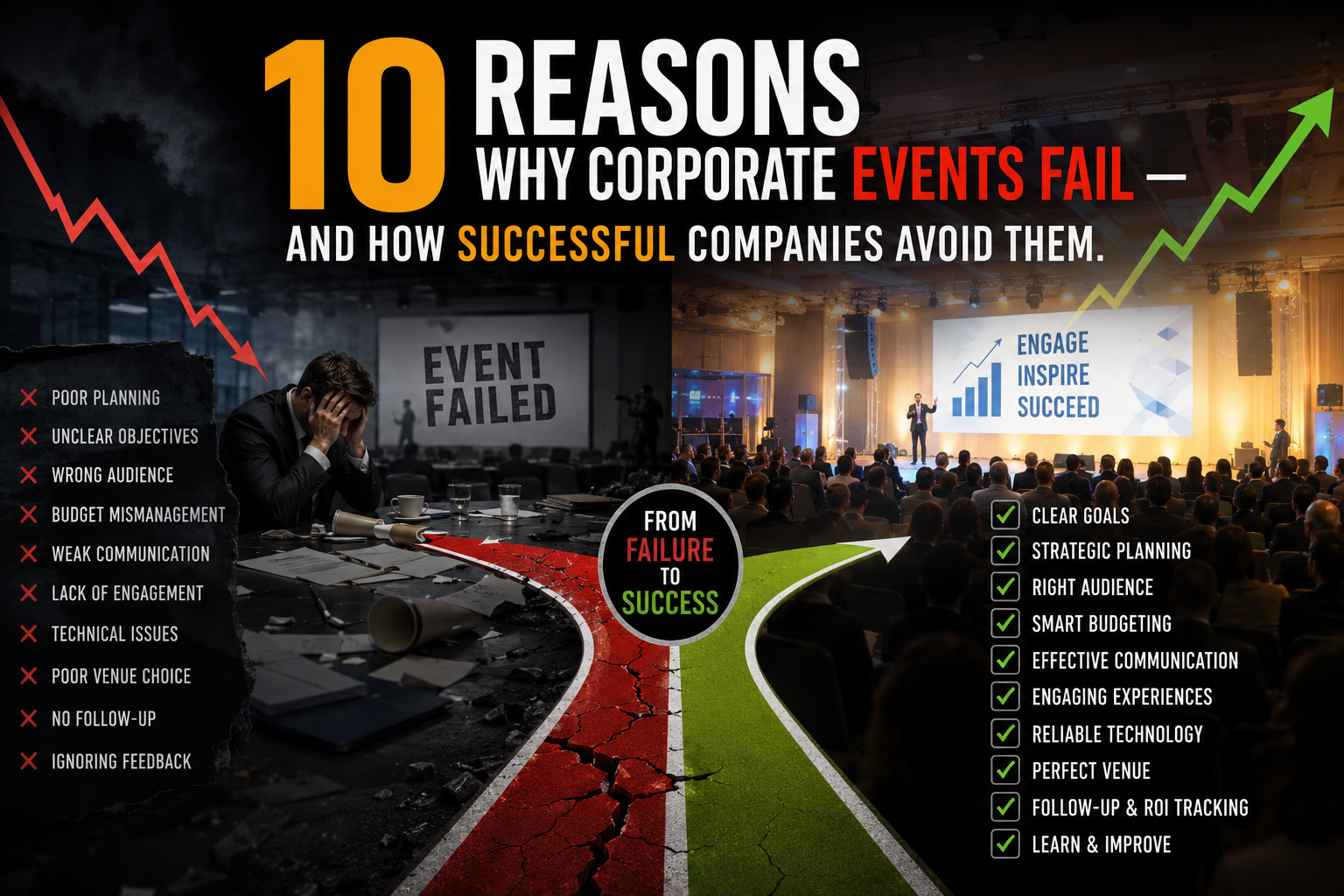
There's a particular kind of silence that falls over a corporate event that isn't going well. You can feel it, the restless shifting in seats, the half-empty buffet tables, the MD checking his watch forty minutes into a three-hour programme. It’s never said aloud, but everyone understands.
Corporate events often fail, and many organizations don’t like to admit it. The frustrating thing is that the causes are usually the same and could easily be prevented.
If you're planning a corporate event in Jaipur or anywhere across Rajasthan, here are ten patterns worth understanding before you commit a single rupee to the venue deposit.
1. The Objective Was Never Actually Defined
Ask ten stakeholders what the event is for, and you'll get ten different answers. A product launch? A team-building exercise? A client acquisition opportunity? When the purpose is blurry, every decision that follows; venue, format, guest list, content, becomes a guess.
Successful companies start with one clear sentence: "By the end of this event, we want X to happen." Everything else is built around that.
2. Budget Was Approved Without a Realistic Plan
Budgets get approved based on gut feel. Then reality arrives; AV costs, catering per head, logistics, contingency and the team starts cutting corners in places that actually matter.
The result is a venue that's slightly too small, a sound system that crackles, and food that runs out forty minutes before the programme ends. None of this is catastrophic alone. Together, they quietly destroy the experience.
3. The Venue Was Chosen for the Wrong Reasons
"It was available" is not a strategy. Neither is "the Boss liked it at somebody else's party."
Venue selection needs to match the event's purpose, the audience's profile, and the logistics of the day. A beautiful heritage property in Jaipur might photograph brilliantly and be completely impractical for a 300-person conference with multiple breakout sessions.
4. The Timeline Was Built Without Buffers
Every experienced event professional has a rule: whatever time you think you need for setup, double it. Equipment arrives late. Sponsors send last-minute artwork changes. The keynote speaker gets stuck in traffic on the Ajmer Road expressway.
Events that fail often do so because the timeline had no slack, and one delay cascaded into several.
5. Communication Broke Down Between Vendors
Corporate events typically involve eight to fifteen vendors operating simultaneously: caterers, AV teams, décor, security, photography, transportation. When these teams are working from different versions of the run sheet, or worse, when nobody has produced a master run sheet at all, the gaps between their responsibilities become the event's weakest points.
A single point of coordination isn't optional. It's what separates a managed event from a managed disaster.
6. The Audience Experience Was an Afterthought
This one stings because it's so common. Teams spend weeks on stage design and speaker selection, and almost no time thinking about what the guest experiences from the moment they arrive. Is parking a nightmare? Does the queue at registration stretch all the way across the building? Is the first session scheduled during peak arrival time?
Attendees form their impression of an event in the first fifteen minutes. What happens after that is recovery.
7. Technology Was Tested Too Late — Or Not at All
A presentation that won't load. A mic that feeds back. A live stream that drops at the exact moment the CEO begins speaking.
Tech failures at corporate events are almost entirely preventable through proper pre-event testing. The reason they happen isn't incompetence, it's that the AV check was scheduled for 7 AM on the morning of the event, and that simply isn't enough.
8. Nobody Owned the Post-Event Follow-Through
The event ends. Everyone exhales. And then nothing happens.
No attendee survey goes out. The leads from the business expo don't get followed up. The photography sits in a shared drive, unused. The ROI that justified the entire spend is never actually measured.
Companies that consistently extract value from corporate events build the post-event workflow before the event even begins.
9. The Event Format Didn't Match the Audience
A three-hour formal presentation for a group of young marketing professionals. A casual outdoor networking event for senior banking executives who'd flown in from Delhi. Mismatched formats are much more damaging than most planners realise.
The format of your event communicates as much as its content does. Getting it wrong doesn't just create discomfort; it signals that the organisers don't quite understand the people they've invited.
10. There Was No Professional Event Partner
This one is sensitive, but it's real. Internal teams are excellent at knowing the *what* of an event. Professional event organisers are experienced in the *how*.
At Ground Zero Events, we have consistently noticed that organizations which view event planning as an extra task for someone already handling other responsibilities often end up creating events that feel like an afterthought. This isn't due to a lack of capability, but rather because event execution is a specific area of expertise, and real experience makes a true difference.
What Separates Events That Work
The corporate events that leave a lasting impression, the ones that get talked about, that move deals forward, that genuinely build culture share one quality: intention. Every decision, from the venue to the run order to the food service timing, was made with the attendee experience in mind.
That level of intentionality doesn't happen accidentally. It's the result of clear objectives, realistic planning, and disciplined execution.